
Robotic process automation (or RPA) is an emerging form of business process automation technology based on the notion of metaphorical software robots or artificial intelligence (AI) workers.[1]
In traditional workflow automation tools, a software developer produces a list of actions to automate a task and interface to the back-end system using internal application programming interfaces (APIs) or dedicated scripting language. In contrast, RPA systems develop the action list by watching the user perform that task in the application’s graphical user interface (GUI), and then perform the automation by repeating those tasks directly in the GUI. This can lower the barrier to use of automation in products that might not otherwise feature APIs for this purpose.
RPA tools have strong technical similarities to graphical user interface testing tools. These tools also automate interactions with the GUI, and often do so by repeating a set of demonstration actions performed by a user. RPA tools differ from such systems including features that allow data to be handled in and between multiple applications, for instance, receiving email containing an invoice, extracting the data, and then typing that into a bookkeeping system. (Source: https://en.wikipedia.org/wiki/Robotic_process_automation )
RPA makes possible for business professionals to configure software robots easily to automate repetitive, routine work between multiple systems. These “bots” directly work across the application user interfaces, coping the actions performed by a person, including copy-pasting data, opening mails and other attachments, logging in and out of applications and filling out forms.
In today’s times, RPA is becoming an important tool driving digital transformation and the future of the work.
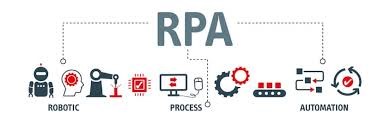
Benefits of RPA
Increased Accuracy: Bots are extremely accurate and are also consistent – they are much less prone to make errors like a human worker.
No interruption of work: These bots can work tirelessly and autonomously 24/7 without requiring the help of any staff to manually trigger bots to initiate business processes. Here humans only interfere to resolve an error or to make any proper decision.
Increased Productivity: Process cycle times are more systematic and can be completed at a faster speed compared to manual process approaches.
Meet regularly compliance standards: Bots follow the instructions they have been configured to follow. They also provide an audit trail history for each step. And if steps in a particular process need to be reviewed, bots can also play back the past completed actions.
Low technical barriers: To configure a software robot programming skills are not needed. As we have a code-free technology, any non-technical staff utilize a drag and drop process designer to set up a bot(By recording their own steps to automate a process).
As RPA is advancing, future generations of the technology will only bring additional value. Advanced learning capabilities such as ML(machine learning) and AI(artificial intelligence) will enable bots to more intelligently explicate the boundary they work across, better handle errors and manipulate unorganized data. ML allows bots to recognize different patterns over time.; means when a process needs human intervention, a bot learns and acts autonomously when the situation happens again.

RPA as a part of the Digital Transformation Journey
In solving automation challenges and pushing organizations to grow into digital workplaces, RPA can be an important tool. RPA helps fill in the gaps as a powerful technology in optimizing end-to-end automation initiatives or enabling employees to be more systematic in handling one-off projects.
Applications of RPA
Walmart-owned Flipkart has deployed around 100 robots in one of its delivery hubs in the outskirts of Bengaluru to help sort packages and streamline its supply chain.
According to the company, the robots which are automated guided vehicles (AGVs), will be working in a tight grid and use collision avoidance technology to ensure free movement. It will be responsible for picking products from a conveyor belt, scan them and drop them down a chute which is assigned to a particular pin code.
As of now, Flipkart’s robots are able to sort nearly 4,500 packages in an hour which is reportedly ten times more than a single human would achieve at the same time. The product throughput can also be increased by five times with minimal increases in infrastructure and the addition of more robots.
Citing Pranav Saxena, VP of robotics and automation at eKart, an ET report said that the system was developed along with vendors. He also explained that the system would be beneficial for the Indian ecommerce market as the companies record a higher number of orders, especially during sale periods.
The company also has plans to deploy automated vehicles in other delivery hubs across the country. However, Flipkart has also ensured that this move will not cause a loss in jobs of the people. The company will instead increase the capabilities of its human workforce by getting more value-added work by them. In order to do this, Flipkart is already running reskilling programmes for its employees. (Source: https://inc42.com/buzz/flipkart-deploys-100-automated-robots-in-its-bengaluru-delivery-hub/ )

 techBlaster